Updated 3/24/26 to include 4 mote items.
Officers need information that arrives before they do, not after. Here are the eight mobile computing capabilities that separate a dependable platform from one that fails when it matters most, and how SmartMOBILE delivers every one of them.
The Real Problem Isn’t a Lack of Data. It’s Data That Doesn’t Reach the Officer.
Consider what happens during a multi-agency response across a wide jurisdiction. Fresh intelligence comes from dispatch. A suspect changes direction. Several units converge from different directions. The information reaching officers is fragmented: partial radio transmissions, secondhand accounts, separate systems that don’t talk to each other.
Nobody has the complete picture. Coordination falters, decisions rest on incomplete detail, and the margin of safety for every officer on scene gets thinner.
This is not theoretical. Agencies across the country deal with it every shift, and the consequences add up: delayed arrests, unnecessary exposure on approach, reports that take twice as long because data was collected once and retyped somewhere else.
The issue is rarely a shortage of data. The issue is that the data fails to reach the officer who needs it, when and where they need it, in a form they can act on immediately.
That is the problem competent mobile computing solves.
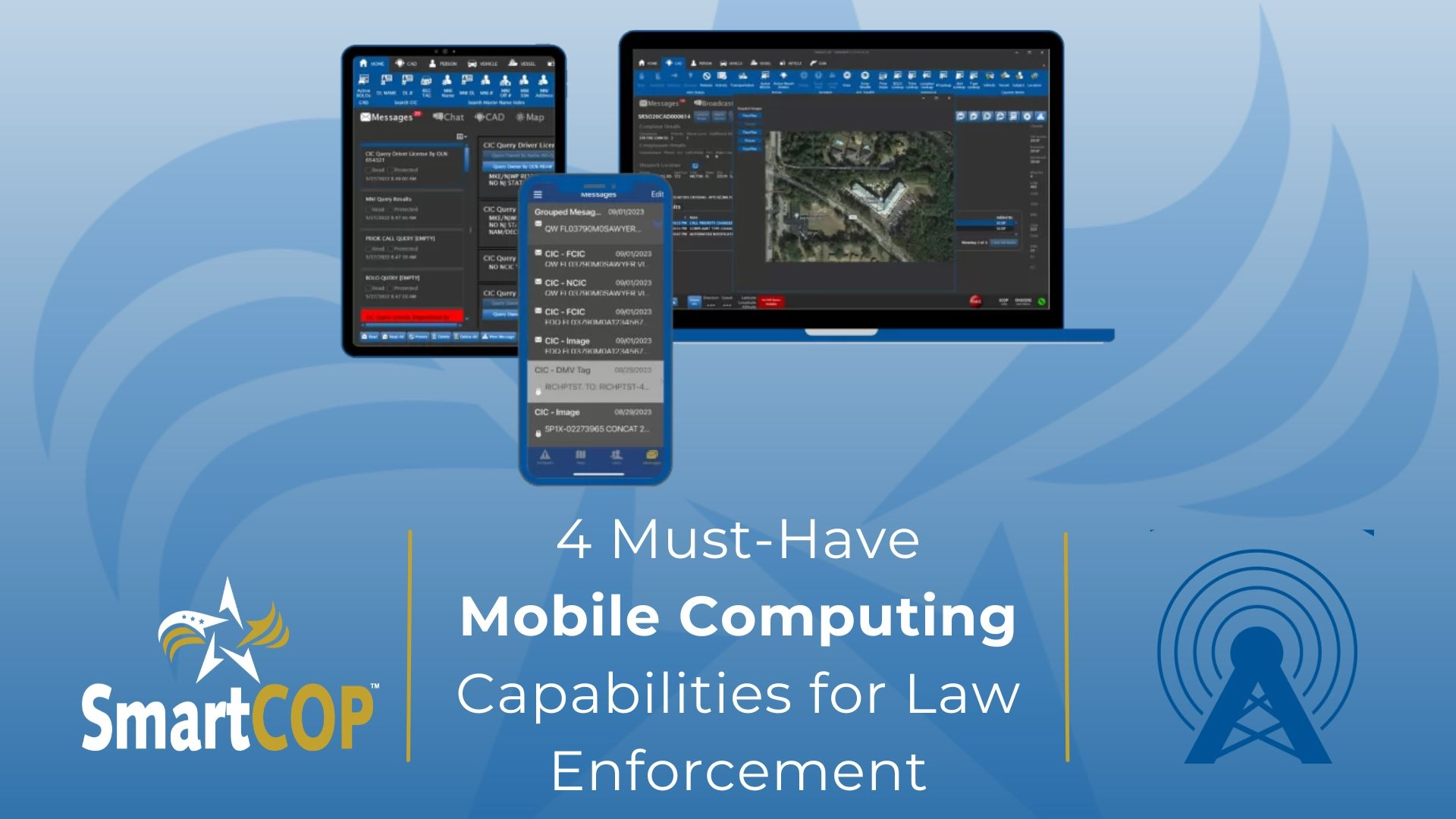
At SmartCOP, mobile computing is the backbone of the SmartMOBILE platform. It combines a mobile computing terminal (MCT), field-based reporting, and message switch access in a single package that officers can learn quickly and depend on for the entire shift. What follows are eight capabilities that any agency should treat as non-negotiable when evaluating mobile technology.
1. Live CAD Access on the Devices Officers Already Carry
The ability to view active call information, unit positions, and incident progression in real time is the single most consequential feature in any mobile computing deployment.
When officers receive live CAD data on their MDTs, tablets, or phones through SmartMOBILE’s SmartMCT component, they can adjust their approach while still en route, request additional units without returning to the vehicle, and stay aware of developments that may change the nature of the call.
Silent self-dispatch allows officers to assign themselves to calls without congesting voice channels, which preserves radio availability for urgent traffic. Supervisors get the same live feed for better resource allocation and a clear picture of where units are committed.
The practical result: fewer repetitions over the air, quicker positioning of personnel, and a shared operational picture that extends from the communications center to the patrol car.
And when the network drops? SmartMOBILE keeps working. Calls, status updates, and notes are stored locally and transmitted once the connection resumes. For deputies working rural counties or officers patrolling areas with inconsistent coverage, this is not a convenience. It is a necessity. Works when the network doesn’t.
2. Mapping, Routing, and Geofencing for Tactical Preparation
Arriving at a location without knowledge of the physical surroundings introduces avoidable risk. SmartMOBILE provides integrated GIS mapping and turn-by-turn routing so officers can identify practical access points, observe the positions of nearby units, and orient themselves to the geography before they exit the vehicle.
Geofencing and proximity notifications add another layer of awareness. Agencies can designate zones around schools, known risk addresses, or active scenes. Officers who enter those areas receive automatic alerts. Arrival detection updates an officer’s status without manual input, which reduces administrative interruption and informs dispatch at the same time.
Mapping data and recent premise history remain accessible during connectivity gaps. The technology does not just offer a map; it provides situational orientation grounded in your agency’s own intelligence.
3. Field-Based Reporting That Eliminates Redundant Work
Few things frustrate line-level officers more than driving back to the station to retype information that was already collected at the scene. The time consumed by this duplication is significant, and the risk of transcription errors increases with each additional handling of the same data.
SmartMOBILE’s reporting tools connect directly to SmartRMS. Incident details, observations, photographs, and signatures entered in the field populate the records system immediately. NIBRS and FIBRS validations operate within the reporting workflow, prompting officers to capture the correct data elements the first time instead of generating correction requests after the fact.
Message switch access from the field allows state and federal queries (NCIC, DAVID, FCIC), with responses retained alongside the relevant case record. The cumulative effect: less desk time, fewer rejected reports, and faster availability of case information to investigators and records staff.
Reports can be composed and validated offline. When service returns, the completed work transmits without further action from the officer. Uninterrupted productivity, regardless of where the shift takes them.
4. Instant Retrieval of History, Hazards, and Situational Context
Every call carries uncertainty. But officers who arrive without knowledge of prior incidents at an address, existing cautions on individuals, or relevant case history face a wider margin of the unknown than is acceptable.
SmartMOBILE draws on SmartDATA and SmartRMS to present prior calls, premise notes, hazard flags, and associated persons or vehicles to the officer before or upon arrival.
This contextual information supports more deliberate decision-making at the point of contact. The Officer in Trouble quick key is always one tap away. Alerts and caution notices appear within the mobile interface where they are immediately visible, not buried in a desktop application back at the station.
Cached history and hazard records persist during outages. This layer of awareness does not disappear when coverage does.
5. CJIS-Compliant Security From the Device to the Database
Mobile computing means sensitive criminal justice data is traveling over wireless networks and living on devices in patrol cars. That creates a security obligation that no agency can ignore.
SmartMOBILE is built with CJIS Security Policy compliance at its core. Encrypted data transmission, role-based access controls, and full audit logging are standard, not add-ons. Officers authenticate through secure methods before accessing any law enforcement database, and session management ensures that unattended devices do not become vulnerable.
For agencies running SmartCOP in a cloud-hosted configuration, data-at-rest encryption and secure, redundant infrastructure protect records around the clock. For agencies that prefer on-premise servers, the same security standards apply. The hosting arrangement is always at the discretion of the agency.
6. Device Flexibility: MDTs, Tablets, and Phones on a Single Platform
Not every agency operates the same way, and not every officer works from a vehicle. SmartMOBILE runs on traditional in-vehicle MDTs, rugged tablets, and smartphones; all from the same platform, with the same data, the same interface logic, and the same offline capability.
This matters for agencies that equip marine patrol units, conservation officers on foot, or campus police who don’t spend their shift behind the wheel. It also matters for budget planning. Agencies are not locked into a single hardware vendor or forced to buy proprietary devices. SmartMOBILE works on the equipment your agency already owns or plans to procure.
A detective pulling records on a tablet at a crime scene sees the same information as a deputy running a plate from the MDT in a patrol car. One platform. No gaps.
7. eCitation and Traffic Stop Workflows That Save Hours Per Shift
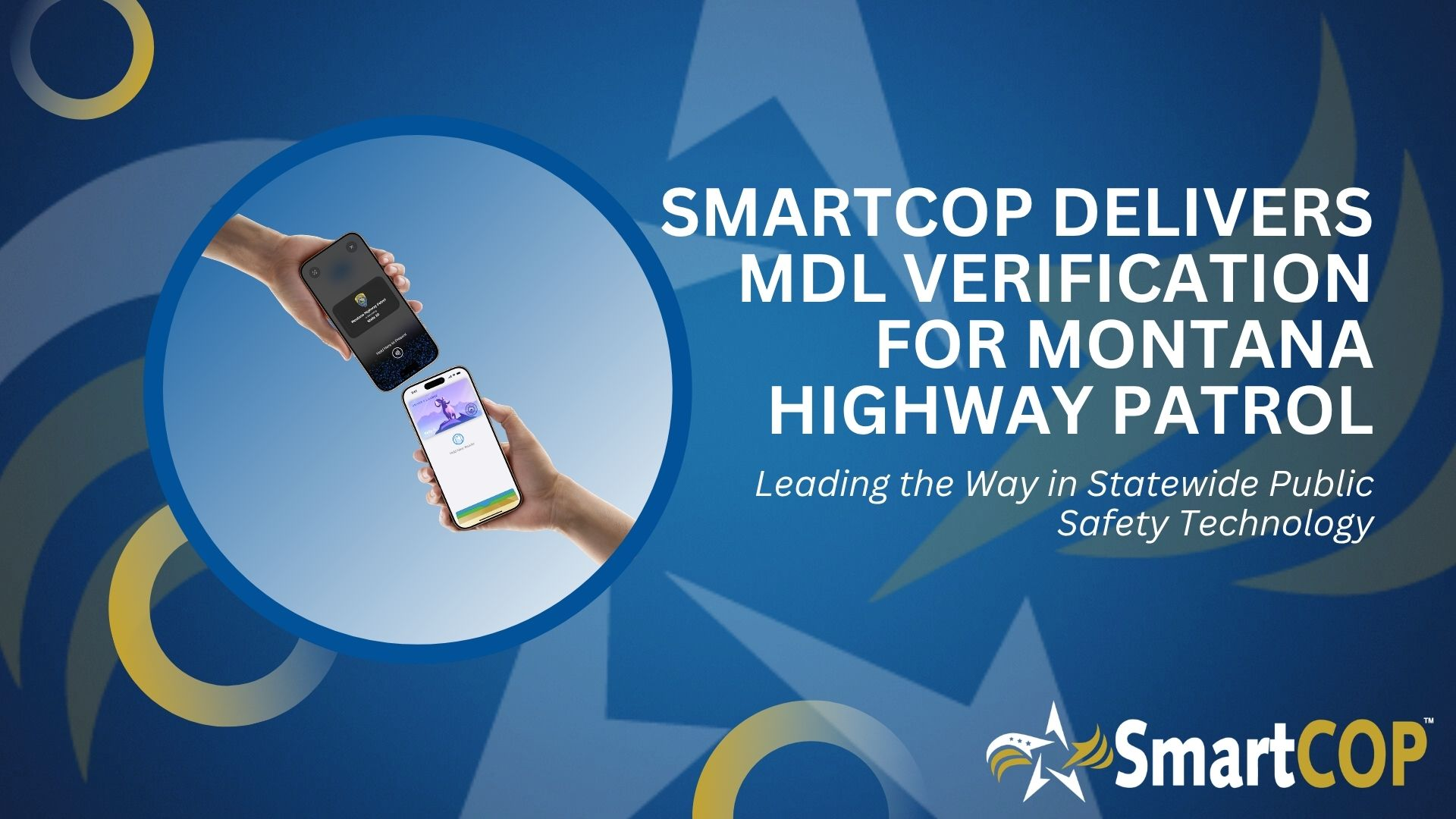
Traffic enforcement is one of the most common activities in patrol, and one of the most data-intensive. SmartMOBILE’s mDL capture feature lets officers scan a driver’s license (including mobile driver’s licenses) and populate all driver data instantly. No manual entry, no typos, no do-overs.
NCIC query returns paste directly into the CAD event and RMS record, so the data collected during a stop doesn’t need to be re-entered anywhere else. Citations can be issued and recorded from the field, with all associated data flowing back to the records system automatically.
For an officer conducting multiple stops per shift, the cumulative time savings are measured in hours, not minutes. That is time returned to patrol, to community presence, and to the work that actually requires a trained officer’s attention.
8. A Connected Platform, Not Disconnected Pieces
The real value of mobile computing depends on what it’s connected to. A standalone MDT that doesn’t feed your records system, your CAD, or your data analytics is just another screen.
SmartCOP was built as a single, connected platform. SmartCAD, SmartMOBILE, SmartRMS, SmartJAIL, and SmartDATA share a common data architecture. Information travels with the incident from the initial 911 call through to the final report without manual transfer between systems and without duplicate entry.
That integration is what turns mobile computing from a convenience into an operational advantage. When an officer completes a field report, that data is available to investigators, records staff, supervisors, and command instantly. When a booking occurs in SmartJAIL, the arrest record is already linked. When a pattern emerges across incidents, SmartDATA surfaces it because all the data lives in one place.
This is not a collection of modules bolted together after the fact. It is a platform built from the ground up for public safety.
What This Means for Your Agency’s Budget and Rollout
Adopting new mobile computing doesn’t have to mean a painful, all-at-once overhaul. SmartCOP supports phased deployments, allowing agencies to start with a pilot group, validate the workflow in real-world conditions, and expand with confidence.
For Florida agencies, SmartCOP provides FLHSMV-approved workflows and FIBRS compliance out of the box. Agencies beyond Florida benefit from the same field-tested dependability and NIBRS-compliant reporting.
Cloud hosting, on-premise servers, or a hybrid configuration: the choice is yours, and SmartCOP supports all three. That flexibility extends to training and onboarding, which are built around practical patrol scenarios, not classroom theory, so officers trust the system from day one.
If your agency is exploring federal or state technology grants to fund a mobile computing upgrade, SmartCOP’s team can help you understand how the platform aligns with common grant requirements.
Frequently Asked Questions
What is mobile computing in law enforcement?
Mobile computing in law enforcement refers to the use of in-vehicle terminals, rugged tablets, and smartphones that give officers real-time access to dispatch data, records systems, mapping, and database queries while in the field. It replaces the need to return to the station for information or report writing.
Can officers use mobile computing without cell service?
With SmartMOBILE, yes. The platform provides full offline functionality. Officers can write reports, access cached history and hazard data, and update call status without a network connection. All data syncs automatically when connectivity returns. Works when the network doesn’t.
Is SmartMOBILE CJIS compliant?
Yes. SmartMOBILE is built to meet CJIS Security Policy requirements, including encrypted data transmission, role-based access controls, secure authentication, and full audit logging.
What devices does SmartMOBILE run on?
SmartMOBILE operates on in-vehicle MDTs, rugged tablets, and smartphones. Agencies are not required to purchase specific hardware; the platform works on the devices your department already uses or plans to acquire.
Does SmartMOBILE support NIBRS and FIBRS reporting?
Yes. NIBRS and FIBRS validation is built into the field reporting workflow, so officers capture the required data elements at the scene. For Florida agencies, SmartCOP is FLHSMV-approved.
How does SmartMOBILE integrate with other systems?
SmartMOBILE is part of the SmartCOP platform, which includes SmartCAD, SmartRMS, SmartJAIL, and SmartDATA. All products share a common data architecture, so information entered once flows across the entire system without duplicate entry or manual transfers.
What does a mobile computing rollout look like?
SmartCOP supports phased deployments. Agencies can begin with a pilot group, validate the workflow in actual patrol conditions, and scale at their own pace. Training is built around real-world scenarios to accelerate adoption.
Can SmartMOBILE be cloud-hosted?
Yes. SmartCOP supports cloud hosting, on-premise servers, or a hybrid of both. The hosting arrangement is always at the agency’s discretion.
Ready to See It Work?
Officers and deputies who spend less time managing their technology and more time attending to the work in front of them perform that work with greater attention and lower fatigue. The eight capabilities described here are not future promises. They are present, tested, and available in SmartMOBILE today, and they continue to function when connectivity is not.
Built for real-world law enforcement.
If your agency is evaluating mobile computing platforms and would like to see SmartMOBILE in a practical demonstration, contact our team.